
Where there is flow, there is no pain
“Where there is flow, there is no pain.”
- Qigong saying
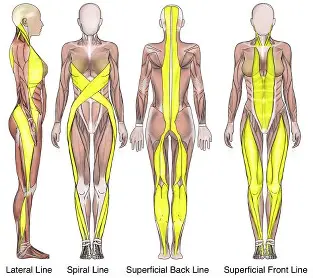
We had some laughs in class last week, talking about “stagnation” of the body, mind, or spirit. It may seem like a hilariously unflattering (especially if accurate!) word to apply to oneself, but stagnation is a commonly used term in Qigong. It describes what is happening when we don’t feel our best, often because stress, injury, or negative emotions have become stuck or blocked from healing circulation. You can imagine these blockages like a dam. As water and pressure build up on one side of the dam, downriver the water gets swampy, stagnant, or dries up all together. In TCM this blockage, or stagnation of energy in our body, is the root cause of all dis-ease.
The energy “rivers” we keep flowing and healthy by doing Qigong are called meridians. Meridians aren’t actual structures in the body, but rather pathways of energy. They usually follow fascial lines. So then, what’s fascia? It’s that AMAZING, adaptable, layered, malleable, tissue that wraps, spirals, and permeates the entire body, including the muscles. Fascia has 5-6X as many sensory nerve endings in it as muscle tissue, so often when you’re feeling stiff and creaky, it’s the fascia that you’re feeling, not the muscles. Fascia connects, integrates, and communicates energy and movement throughout our entire body.
Although fascia doesn’t have much blood supply, it is layered with hydration, making most of it extremely pliable and able to easily remodel itself as we move. Early Qigong masters figured this out and created a system of exercises to gently stretch and free up fascial tissue. These exercises are organized around the fascia/meridian lines in the body and move us through all the planes of movement: front and back, side-to-side, and rotational. By addressing the fascial lines, these movements gently and deeply change patterns of stagnation and open healing flow throughout all the organs, joints, tissues, and fluids of our body. The result? As we say in Qigong, “Where there is flow, there is no pain.”
Fascia and energetic meridian lines are integral to two of the most popular and effective practices we often explore in our classes, namely acupressure and Tao Yin (stretches to guide and direct energy through the meridians.) I’ll write more about this in future newsletter, so stay tuned. Better still, join us and see for yourself how this profound, energizing, and relaxing practice gets the good energy flowing.
Schedule Updates for March/April
Next Millbrook Library Free In-person/Zoom Qigong: Fridays, April 3rd and 17th, 10 - 11am. Please register for this class by contacting Millbrooklibrary.org. The library will send you a reminder a few days ahead of time.
Save the Date! Qigong at Innisfree Gardens, Saturday, May 23! Time to be announced closer to the day.