Opening the Aperture: How to Enter Meditation

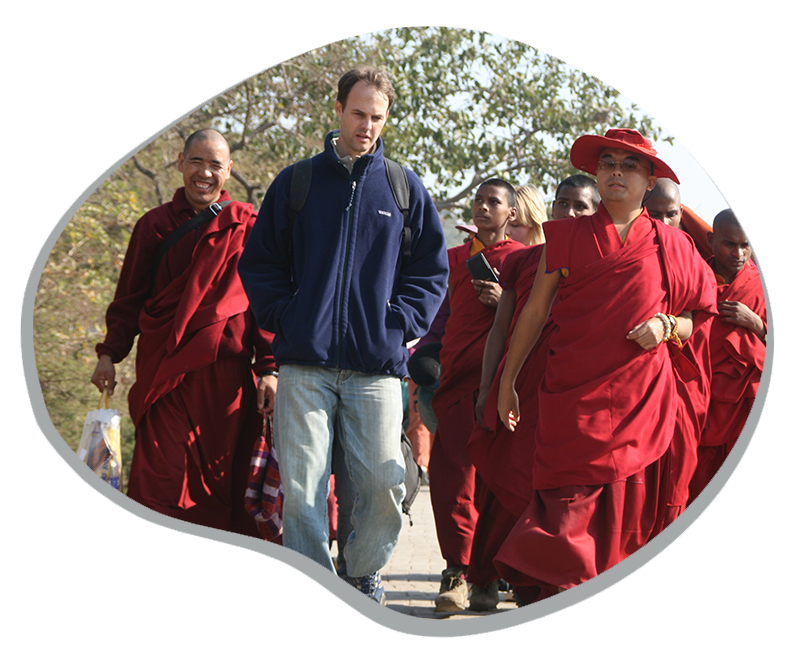
Cortland Dahl at the start of his journey, with Mingyur Rinpoche in Rajgir, India, 2007

The very beginning of any Qigong practice offers a moment worth savoring. We turn the dial of our minds to “relax”.  We release the mental detritus of worry and agenda, and unclench our breath and our body. After a moment or two of this, we’re better prepared to plug into the limitless energy of the Universe.

Dr. Cortland Dahl, contemplative neuroscientist and co-creator with Dr. Richard Davidson of the Dharma Lab podcast (which I highly recommend) calls this moment “widening the aperture”.  After living, meditating, and studying with esteemed Buddhist Rinpoches in Tibet, Nepal, and India for many years then continuing his research and education in neuroscience back in the US, he suggests three simple steps to begin any meditation practice, including a moving meditation like Qigong:

1) With the eyes, let attention include the edges of the visual field.

2) With the breath, notice the release that comes with an exhale.

3) With the mind, sit as though you are about to meditate, but haven’t started yet.

As a long-term meditator, I continually search for ways to keep my practice fresh and engaging. I share these three steps with you today, because I’ve found they really help me to settle down and focus. I especially love #3, which I’d never heard before. As Dr. Dahl writes, “You are a little more alert because you are getting ready. But you haven’t begun following the breath or running a technique…If it feels like nothing’s happening, that’s perfect.”

 I hope this technique to “widen the aperture” helps you, too, and makes that precious moment, when we leave the limits of our habituated mind and enter into meditation, something to look forward to and enjoy.  

Cris CaivanoComment